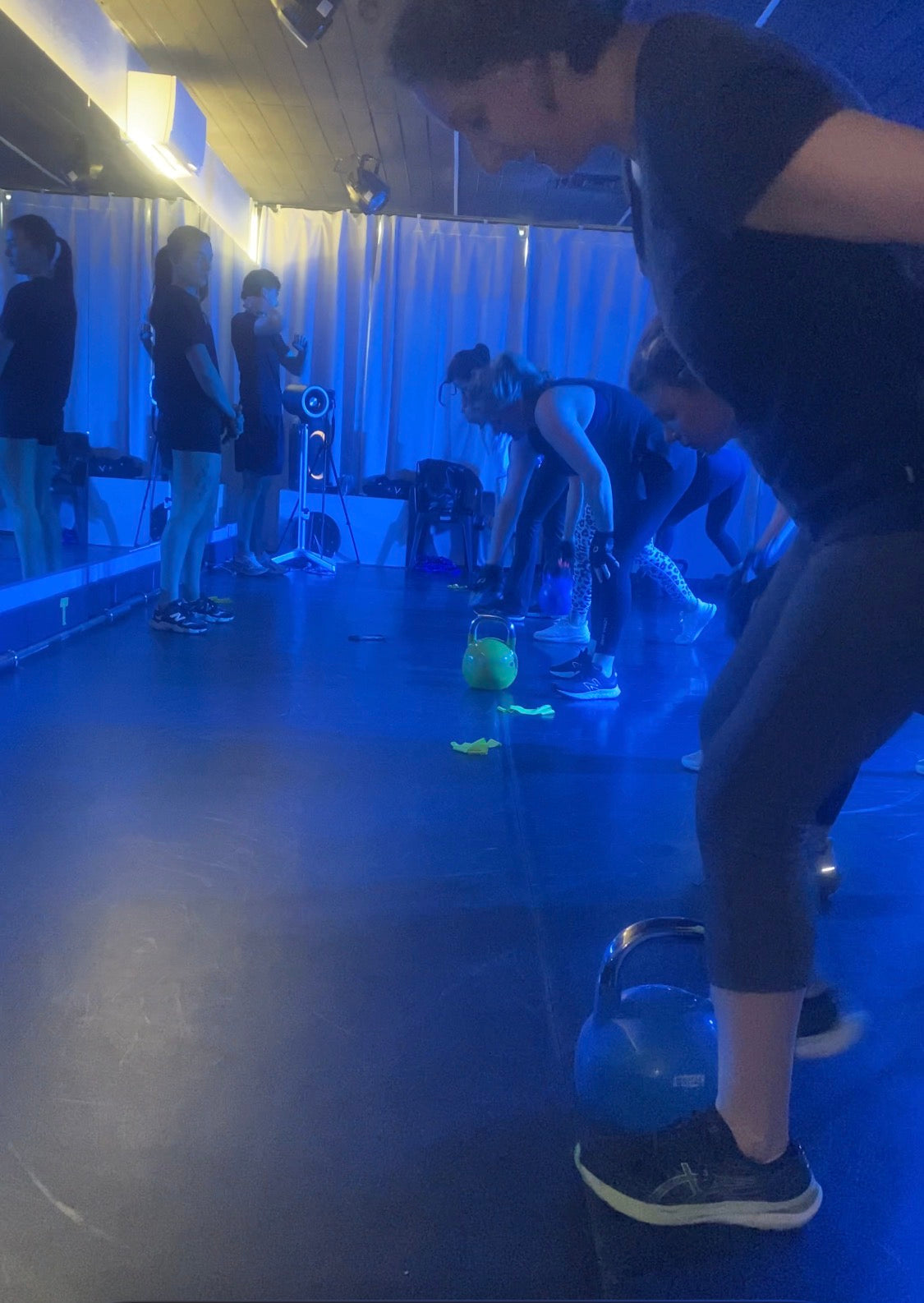
Something changes in your 40s. Recovery slows, strength you once took for granted starts quietly slipping, and from perimenopause onward, declining oestrogen accelerates the loss of both muscle and bone. Left unaddressed, women can lose a significant portion of their bone density in the years around menopause — which is why osteopenia and osteoporosis diagnoses so often arrive as a shock in your 50s and 60s.
Here's the empowering part: this trajectory is not fixed. Decades of research point to progressive resistance training as one of the best-supported approaches available.
What strength training can do for you after 40
It signals your bones to stay strong. Bone responds to load. When you lift progressively heavier weights, the mechanical stress tells your body to maintain and build bone mineral density — something walking and swimming, for all their benefits, simply don't do to the same degree.
It helps preserve muscle. Age-related muscle loss (sarcopenia) begins earlier than most people realise and accelerates with each decade. Muscle is your metabolic engine, your joint protection and your independence insurance. Training helps preserve it.
It helps protect against falls and fractures. Strength, balance and coordination trained together are among the best-supported defences against the falls that so often mark a turning point in older age.
It changes how you feel now. Better sleep, better mood, easier daily life — groceries, stairs, grandkids, gardens — and the genuine confidence of watching yourself get stronger month after month.
The myths that hold women back
'I'll get bulky.' Building large muscle takes years of deliberate, high-volume work and eating. What you'll actually build is strength, shape and bone.
'It's too late to start.' Research consistently shows meaningful strength gains in women starting resistance training in their 50s, 60s, 70s and beyond. The best time to start was twenty years ago; the second-best time is this week.
'Cardio is enough.' Cardiovascular exercise is important — but it doesn't preserve muscle or meaningfully load bone. You need both, and if you can only prioritise one after 40, the evidence favours strength.
What good training looks like at this stage of life
Two to three sessions a week, built around the fundamental movements — squat, hinge, press, pull, carry — with loads that genuinely challenge you and increase progressively over time. Just as important: coaching that adapts to your body. Old injuries, joint replacements, pelvic floor considerations, osteopenia — these aren't reasons to avoid lifting; they're reasons to lift with expert guidance rather than guessing alone at a big gym.
Starting safely in the Inner West
At Movement Studio in Ashfield, our small-group classes (women only, all ages and levels) are led by Dr Naomi (Osteopath) and a team of qualified coaches — so your program accounts for your history from day one, and our on-site Osteopathy clinic is there if anything needs hands-on attention. Many of our members started training with us in their 40s, 50s and 60s having never touched a barbell.
Try a class free:book your free trial session online or text 0434 395 408. We're inside Kinetic Studio, Level 1, 206–208 Liverpool Rd, Ashfield (entry via Holden St), a short walk from Ashfield station.
Subscribe
Sign up to get the latest on sales, new releases and more …